
The etiology of menopause remained mysterious for millennia. Two barriers prevented the connection of ovaries to menopause. First, menopause was thought to be a human specific, age-related phenomenon — perhaps even without a physical basis. It was unclear if barnyard reproductive practices held any connection to human physiology. Second, although ovaries were long known to occur specifically in females, implying a reproductive function, their endocrine functions remained unclear until medicine advanced sufficiently to remove them in humans. This, of course, stands in contrast to castration of male testes, a brutal practice seemingly as old as human civilization itself. Only after experimenting with surgical removal in humans, did the understanding of menopause as a consequence of ovarian failure emerge.
In parallel, “organotherapy,” the progenitor of modern Endocrinology, was developing with a series of barnyard-inspired transplantation and extraction experiments. While some of these landmark experiments may have been sensationalized placebo effects, the concept of replacing organs with concentrated extracts catalyzed the emergence of Endocrinology. And, importantly, early organotherapy inspired physicians to canvas the farm for medicine. From that search, the first hormone-based treatment for menopause emerged: bovine ovary sandwiches.
Describing Menopause
The human passage through middle age and the cessation of fertility have occupied human consciousness for millennia, long before medicine developed a unified language to describe these changes. Cultural and religious texts bear witness to an ancient awareness that reproductive capacity does not persist indefinitely. The Book of Genesis, in its account of Sarah’s advanced age, notes that “it had ceased to be with Sarah after the manner of women” (Genesis 18:11, KJV), a delicate acknowledgment that even in antiquity, the cessation of menses was recognized as an inevitable feature of aging. As the medical historian Victor Cornelius Medvei observes, this connection between advancing age and the loss of fertility is “millennia older” than any scientific framework that would later attempt to explain it.1
Throughout the medieval period, this practical knowledge persisted, even if obscured by the limitations of contemporary medical theory. Hildegard of Bingen, the twelfth-century Benedictine abbess and natural philosopher, documented in her medical writings that menstruation typically ceased around the fiftieth year of life.2 Hildegard’s observations, grounded in the direct experience of a woman living in community with other women, represent an early attempt to anchor this universal phenomenon to a specific age. Yet despite such observations accumulating across centuries and cultures, medicine failed to develop a precise, unified concept. Instead, the condition existed in a linguistic fog: physicians and writers employed terms such as “cessation of the menses,” “climacteric,” and “change of life” largely interchangeably, each term carrying different historical and etymological baggage but little consistent meaning.
The first step toward medical precision came in the early nineteenth century, when the French physician C.P.L. de Gardanne coined the term “menopause” in 1821.3 De Gardanne’s 1816 treatise, initially titled De la ménépausie, was revised and republished under the now-familiar term ménopause in its 1821 edition, drawing from the Greek roots menos, meaning month, and pause, meaning stop. This neologism represented more than mere semantic refinement; it signaled medicine’s growing ambition to isolate and name a discrete biological event. Yet the coining of the term, while intellectually tidy, masked a deeper confusion about menopause’s significance and prevalence in human life.4
Hidden Organ: the Ovary
Here lies the fundamental paradox of reproductive biology: the testis revealed itself through brutality, while the ovary guarded its secrets for two thousand years.
Consider the eunuch. From the courts of Rome to the harems of Constantinople, from medieval Christendom to imperial China, the castrated male stood as a living anatomical text. The message was unmistakable and written across his entire body: no facial hair, a soprano’s pitch, breasts that swelled with age, a body that refused to build muscle the way other men’s did, a muted sexuality. You didn’t need to dissect a testis to understand what it did. You simply needed to look at what happened when it was gone. The function of the male gonad was, quite literally, impossible to miss.5 Aristotle could theorize about the nature of semen. Galen could speculate about its composition. But any observer—scholar or slave-keeper—could see that the testis made men into men. The phenotype of castration was so stark, so obvious, that it served as a cruel example demonstration of human endocrine physiology.
The ovary, by contrast, was a locked box.
When anatomists first dissected the female body, the ovaries were there to be found—pale, almond-shaped organs buried deep in the pelvis, hidden behind loops of bowel and peritoneal folds. Herophilus, the third century BC Alexandrian physician, was among the first to describe ovaries, calling them didymi, or “female testes.”6 The name itself is instructive. Confronted with an unfamiliar organ, he reached for the organ that was otherwise absent — testes, but female. But, you could not castrate a woman the way you could a man. The surgical removal of ovaries was far more dangerous, far more likely to result in infection, hemorrhage, or eventually death. There is no tradition of female eunuchs. Locked away, the ovaries obscured their purpose for centuries.
Without the brutal clarity that castration provided for the testis, the ovary was more a matter of philosophy.
Aristotle, writing in the fourth century BC, flatly denied that the ovary was equivalent to the testis at all. In his view, women did not produce true semen (true!). The male contribution was everything: he provided the morphe, the form, the principle of life. The female? She was a vessel of “brute matter”—menstrual blood, inert and passive. She was, a mutilated male, her development arrested by the coldness of the maternal womb.7 In this framework, the ovary had no generative function. It might secrete something? Perhaps a lubricant? But, it was not the female counterpart to the powerful male testis because women, in Aristotle’s estimation, did not possess a counterpart to male semen.
Galen disagreed. The great physician of the second century AD had actually dissected female reproductive organs, and what he saw convinced him that the ovaries were analogous to testes. They must produce a female equivalent of semen. Galen argued both male and female contributions were necessary for the formation of the embryo (true!). Though, Galen conceded, the male contribution was probably more important, since testicles are larger.8 Galen and the Hippocratic corpus also harbored a peculiar conviction: that the right ovary produced male infants, while the left produced female ones.9 One wonders whether this reflected genuine observation or merely the human tendency to impose order on mystery.
Here, then, was the crucial debate of Western reproductive biology for nearly two thousand years: Did the ovary produce semen or not? Was it a true gonad? Or, an ornamental appendage?10 Anatomists through the Middle Ages and Renaissance continued to call ovaries “female testes,” perpetuating Herophilus’s original nomenclature even as they argued about what that name actually meant.11 By the 17th century, advances in microscopy enabled Reinier de Graaf to examine ovaries from recently bred rabbits. Under a microscope, de Graaf identified the ovarian follicles, but incorrectly identified them as “eggs.”12 The identification of follicles as “eggs” led to the term ovaries for the female sex organ.
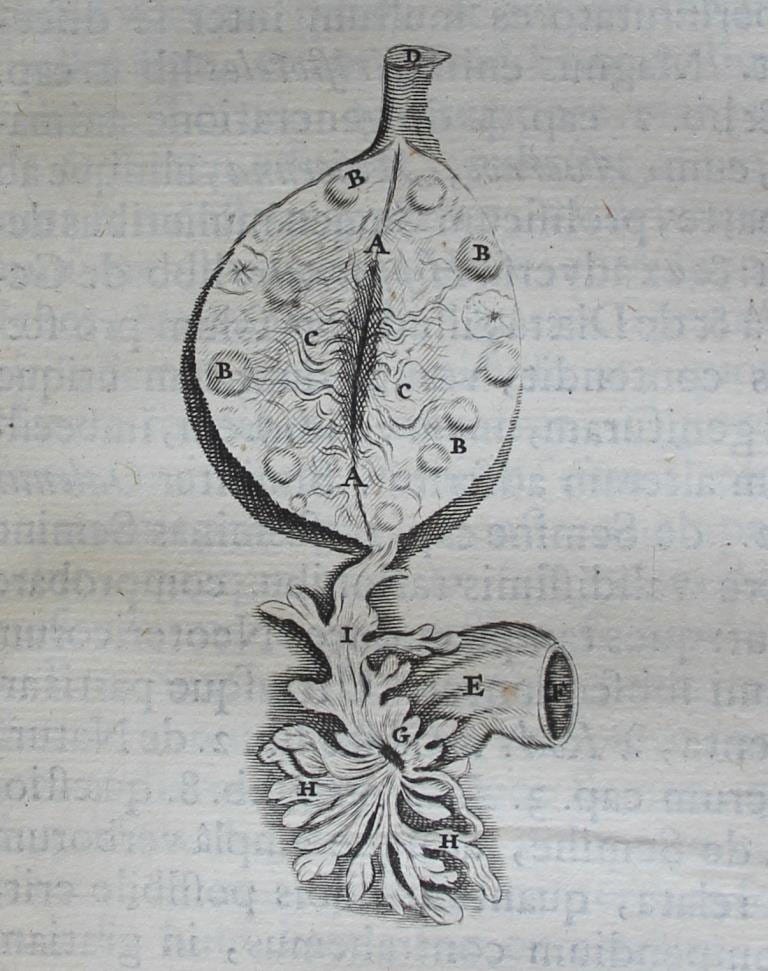
Yet, the question of ovarian function seemed resolvable only in theory because there was no empirical way to settle it. One could not simply remove a woman’s ovaries and then look at her, the way one might with a eunuch, and infer the organ’s function and contribution to human health.
So, the answer waited for an era of surgical callousness to provide the crude experiment that nature and circumstance had denied to earlier centuries. That experiment would come in the nineteenth century, when physicians – largely Americans – began removing ovaries en masse. It would finally produce the female equivalent of the eunuch phenotype. It would, at last, partially reveal what the ovary actually did.
Menopause: Ovarian Failure
The recognition that the ovaries played a central role in menstruation emerged gradually from clinical observation rather than systematic investigation. The earliest documented case appeared in the surgical records of Percival Pott, a renowned eighteenth-century surgeon, who in 1775 reported treating a young woman with an ovarian hernia. When both of her ovaries were removed during surgical intervention, Pott observed that the procedure was “followed by shrinkage of her breasts and cessation of her menses”.13 Yet Pott himself did not elaborate on the significance of these findings. His account remained a clinical curiosity. A striking but isolated observation.
Yet Pott’s case, dramatic as it was, did not emerge from a vacuum of ignorance about ovarian function. For millennia farmers had been conducting their own crude experiments in oophorectomy. The castration of male livestock had been documented since early antiquity. But, female animals presented a different problem, and spaying—the removal of ovaries from sows, cows, and other breeding stock was practiced throughout the agricultural world. Farmers who spayed their animals observed what any careful observer could not miss: the cessation of estrus, the arrest of reproductive capacity, and often an accelerated tendency toward fattening – perhaps the practical utility of the practice. These were not abstract physiological principles but practices of animal husbandry, passed down through generations of agricultural experience.
By the nineteenth century, this tacit agricultural knowledge began to surface in medical literature with increasing specificity. Albert Puech, in 1873, systematically documented what generations of farmers could have told him—that the uterus ceased to grow after ovarian removal in sows.14 More significantly, George Beatson in 1896 drew explicit inspiration from farmer’s spaying practice, having observed that castrated cows maintained their milk production but failed to develop the full breast tissue of intact animals. This observation—that the ovaries governed not only reproduction but the growth and function of seemingly distant organs—led Beatson to a radical therapeutic leap: the use of oophorectomy to arrest breast cancer in women. The barnyard, it seemed, had been teaching lessons that medical science was only now prepared to learn.
The interpretive leap came two decades after Pott through the work of John B. Davidge, an American medical student studying at Edinburgh. Reflecting on Pott’s case in his 1794 dissertation, Davidge drew an explicit causal connection that his predecessor had left implicit. He concluded that “menstruation is attributable to a peculiar condition of the ovaries serving as a source of excitement to the vessels of the womb.”15 This formulation, represented the first articulation that ovarian function and menstrual function were linked. The ovaries were not merely passive reproductive organs but active agents necessary for menstruation and reproduction.
Yet even this early insight did not immediately transform medical knowledge. The connection between ovaries and menstruation remained largely dormant in the medical literature, more theoretical than clinically actionable. As Medvei notes, “Until 1872, this was the only scientific account of the effect of bilateral oophorectomy on the periods”—a startling acknowledgment that Pott’s 1775 report stood virtually alone in the medical record for nearly a century.16 Corroborating experimental experimental work, conducted before 1861, demonstrated hat menstruation did not occur in women whose ovaries had been surgically removed, yet these findings too remained scattered within the scientific literature.17 The observation was known; the principle was understood in learned circles. But the clinical implications had not yet been widely grasped or systematized.
This gap between isolated knowledge and widespread medical appreciation would narrow dramatically only with the adoption of oophorectomy as a therapeutic practice. When physicians began deliberately removing ovaries in large numbers from the 1870s onward, they could no longer ignore the consequences. The mass clinical experience of the oophorectomy era would force the medical profession to confront what Pott had observed in isolation and Davidge had theorized in abstraction: that the ovaries were indeed the seat of a function essential not merely to reproduction but to the woman’s entire physical constitution. Before this transformation, the knowledge existed in fragments; only systematic clinical practice would make it foundational to medical understanding.
Ovarian necessity: “Battey’s Operation”
Robert Battey’s 1872 popularization of bilateral oophorectomy18—which he termed “normal ovariotomy” or “Battey’s operation”19—represents one of medicine’s most consequential and troubling interventions. Operating under the theoretical framework that ovarian dysfunction caused a cascade of systemic complaints through “reflex irritation,” Battey and his followers applied the procedure with remarkable indiscrimination. Women presenting with “ovarian epilepsy,” menstrual irregularities, insanity, nymphomania, and various ill-defined “nervous” complaints found themselves candidates for surgical removal of both ovaries.20 Battey’s operation promised relief from suffering. Although unclear if patients actually felt relief, Battey’s operation uncovered a new function for ovaries in women at an appalling human cost.
The scale of this surgical enterprise was impressive. A contemporary estimate placed the total number of oophorectomies performed in the United States by 1906 at approximately 150,000, a figure suggesting that bilateral ovary removal had become nearly routine in gynecological practice.21 What renders this statistic particularly striking is the demographic profile of those operated upon. These were not aging women at the threshold of natural menopause. Rather, women in their twenties and thirties at the apex of reproductive life. A generation of young women underwent surgical castration, often for unrelated complaints and experiencing normal human emotions. Battey’s operation was, initially, ‘essential medicine’ without much attention to the potential lasting and irreversible consequences. If anything, there was enthusiasm for the eugenic potential of sterilizing ‘hysterics’ and other mentally ill women. Consideration of other essential functions appears minimal.
The consequences of mass oophorectomy were immediate, consistent, and undeniable. Women who had undergone radical ‘normal oophorectomy’ experienced the sudden onset of debilitating climacteric22 symptoms: hot flashes of startling intensity, vaginal atrophy, negative mood affect, and the abrupt cessation of menstruation. These iatrogenic, surgically induced symptoms appeared eerily similar to menopause. But, instead of appearing at mid-life, these symptoms emerged in thousands upon thousands of young women. Surgeons had created an accidental mass experiment. The women who suffered these symptoms were living laboratories exemplifying a biological truth that had long eluded articulation: menopause is a consequence of ovarian failure.
I find it remarkable how long it took for this truth to be realized. While the essential functions of testes were known to the ancients, the internal location of ovaries prevented elucidation of the ovary-menopause connection until the mid-19th century. Menopause appears rare among mammals. At the time, it appeared uniquely human. So, to truly prove the connection between “climacteric symptoms” of middle age and ovarian failure, we needed surgeons to brashly and brazenly remove ovaries to understand their essential functions.
The irony of Battey’s work is exquisitely damning. Battey promoted his operation as a cure-all for womanly ills - hysteria, excessive menorrhea, amenorrhea, nymphomania, anxiety, epilepsy, moral insanity.23 The irritated ovary instigated the pathology. Remove the offending organs; eliminate the source of suffering.
Instead, the operation created a new and dramatic iatrogenic menopause. Although, such concerns certainly didn’t stop Battey from promoting his “success” aggressively. The very procedure meant to cure instead demonstrated, through the bodies of thousands of women, that the ovaries were not merely expendable, hysteria-inducing organs. The operation designed to eliminate a hypothesized root of dysfunction instead proved the necessity of ovaries themselves.
This recognition found systematic expression in Adolf Hegar’s 1878 monograph, Die Castration der Frauen, which documented with clinical precision the cascade of symptoms following bilateral oophorectomy.24 Hegar’s work transformed the scattered observations of individual practitioners into a coherent symptomatology; a syndrome of ovarian deficiency that demanded explanation and treatment.
In this sense, the age of Battey’s operation was less an era of therapeutic success than of inadvertent discovery. Thousands of women became the unwitting subjects of what might be called the “necessity experiment”—the mass, unplanned demonstration that ovaries were vital to female health and that their removal precipitated a menopause-like state.
What could medicine do for these women? Could the ovaries be replaced?

Interlude: Organotherapy
The concept of treating disease by administering extracts derived from animal organs sounds almost incomprehensibly foreign to modern medicine. Yet this practice, which flourished from the 1880s into the early twentieth century, represents a crucial and paradoxical chapter in the prehistory of endocrinology. Organotherapy was simultaneously “an appalling chapter in the history of medicine” and the direct intellectual precursor to legitimate endocrinology.25 To understand we must first grasp how physicians came to believe that the body’s internal function could be regulated by the systemic administration of organ extracts—a conviction that, however misguided in most applications, contained a profound biological truth.
The intellectual seeds of organotherapy were ancient.26 Chinese traditional medicine had long employed organ extracts and animal urine preparations to treat ailments.27 Surgical and scientific innovations converged in the nineteenth century to rationalize a basis for previously speculative, empirical remedies. In 1849, Arnold Berthold’s provided the first rigorous demonstration of what we would now call endocrine function.28 Castrating young roosters typically caused them to lose their characteristically male plumage and aggressive behavior. However, when Berthold transplanted testes from another rooster into the abdominal cavity of a castrated recipient, anatomically distant from their original location and therefore disconnected from their innervation, the roosters nonetheless retained their male traits.29 Berthold’s concluded the testes must exert their influence not through neural pathways, but through some substance carried in the blood. This might have been, in essence, the founding experiment of endocrinology. Yet, it appears largely ignored by the contemporary medical world.
During the mid-late 19th century, Claude Bernard developed the revolutionary concept of the milieu intérieur: “the internal environment.” He demonstrated that the liver actively secretes glucose directly into the blood, independent of nervous system control.30 Bernard’s insight provided the intellectual foundation from which endocrinology would eventually emerge: the body’s internal organs do not merely respond to the nervous system but actively regulate physiology through substances released into circulation. By the time Bernard’s ideas gained currency, the stage was set for a dramatic and deeply misguided experiment that would nonetheless galvanize the entire field.
In 1889, at seventy-two years of age, the French physiologist Charles-Édouard Brown-Séquard, who some consider a grandfather of endocrinology, performed what he characterized as “rejuvenation” experiment on himself. He, an old man, sought vitality. Where might the vitality of young men lie? If eunuchs lack the masculine substance, then it must reside in the testes, of course. He prepared extracts from the testes of dogs and guinea pigs and injected them into himself. Brown-Séquard reported extraordinary results: increased strength, improved urinary function, enhanced mental clarity, renewed sexual capacity, and restoration of a youthful vigor.31 Séquard presented these findings to the Société de Biologie in Paris with such conviction that they created a sensation. The popular press seized upon the news, and what had been a scientific communication became a worldwide phenomenon. Desperate patients and ambitious entrepreneurs rushed to exploit the discovery. Thankfully, the modern world has evolved beyond hype-driven rejuvenation gold rushes where prominent influencers encourage people in need to inject questionable substances to cure their ails.32
Yet Brown-Séquard’s failure was, perhaps paradoxically, extraordinarily productive. Although it remains unclear if his own experiment succeeded in restoring his vigor, it lodged a powerful idea in the medical imagination: blood-borne secretions from organs could be extracted, concentrated, and administered to patients to compensate for organ loss. This conviction, however poorly grounded in his particular case, launched an enormous organotherapy industry. Physicians and manufacturers offered extracts of brain, bone marrow, kidney, spleen, and virtually every organ imaginable. Caveat emptor.
Yet within this chaos lay genuine discovery. The thyroid proved to be the decisive proof of concept. Emil Theodor Kocher and the Reverdin brothers had observed that surgical removal of the thyroid gland caused myxoedema , a severe condition involving metabolic collapse and neurological decline. Prior work linked surgical removal of the thyroid to development of myxoedema.33 Several attempts had been made to transplant thyroids into humans to treat myxoedema with limited success. Geroge Murray, an English physician, had observed that surgical transplantation of sheep thyroid by his mentor Victor Horsley and the Portugese physicians Bettencourt and Serrano led to immediate resolution of the symptoms. Muarry inferred that the resolution occurred to rapidly for vascularization and adoption of the xenotransplanted thyroid gland, therefore the substance must be pre-existing in the thyroid gland, not a function of the vascularized gland. Additionally, injection of thyroid juice to thyroidectomized dogs prevented the expected demise of the animals. So, Murray reasoned that the same might hold true in humans. And it did!34
In 1891, George Murray treated a myxoedema patient with injections of sheep thyroid extract.35 The patient survived and thrived for twenty-eight more years.36 Murray’s kinetic reasoning was ingenious: if a transplanted thyroid worked too quickly for new blood vessels to form, then the active therapeutic substance must be diffusible in the bloodstream. Perhaps, you did not need the organ itself, only its secretion? Oral thyroid extract followed rapidly, and thyroid therapy became the first genuine endocrine replacement therapy. Most other organotherapy was ineffective. But the threshold had been crossed. The notion that glandular secretions could be isolated, administered systemically, and used to restore homeostasis had been validated by clinical success. Within this framework—impure as it was—the future of hormone therapy, including eventually the hormone therapy of menopause, would be constructed.
Grafting Ovaries
In the final decades of the nineteenth century, a bold idea began to take shape among European surgeons and experimentalists: if the ovary secreted vital substances into the bloodstream, perhaps a transplanted ovary could rejuvenate women who had lost their reproductive capacity. This prospect emerged from recent work showing that thyroid grafting was technically feasible. If transplants and grafts could work for the thyroid, why not for the ovary?
Emil Knauer, a young Viennese physician, decided to test this hypothesis experimentally. In 1896, working as an assistant in Vienna, Knauer performed a series of transplantations using rabbit ovaries grafted to ectopic sites within the abdomen. His results proved decisive: when the grafts survived and became vascularized, they prevented the atrophies that normally followed oophorectomy.37 The ovary, Knauer concluded, must produce an internal secretion – not a nerve signal – that circulated through the blood to maintain reproductive tissues. Knauer published his comprehensive findings as a monograph in 1900 answering a fundamental question: the ovary’s influence was not neural but chemical.
Three years later, Josef Halban, also working in Vienna, presented results that powerfully corroborated Knauer’s findings. At a meeting of the Vienna Gesellschaft der Aerzte in 1899, Halban reported transplanting ovarian tissue into oophorectomized infant guinea pigs. Oophorectomized infant guinea pigs failed to develop mature reproductive systems. The outcome was striking: the animals developed normal uteri and fallopian tubes with the translplanted ovarian tissue. Halban’s conclusions paralleled Knauer’s and both men drew an explicit connection to Berthold’s classical rooster experiment arguing that the reproductive organs also had additional endogenous secretory functions.38 The transplanted organs worked through the bloodstream alone, severed from all nerve connections, remained capable of sustaining distant reproductive structures.
If such results could be achieved in animals, could humans benefit? Robert Tuttle Morris, a New York surgeon, believed so. He set out to answer the question clinically. In 1895, Morris performed the first ovarian transplantation in humans, completing twelve operations by 1901. His stated objective was explicit: “the avoidance of premature menopause.”39 Morris claimed that successful ovarian grafts could even restore menstruation in oophorectomized women. He even published a case report of ovarian grafting that claimed to restore reproductive function to an oophorectomized woman. In it, a young woman with degenerated ovaries received an ovarian graft in February 1902. Three years later, she became pregnant. In 1906, she delivered a healthy girl.40 Morris argued the result vindicated the entire enterprise. If transplanted ovarian tissue could sustain pregnancy, it must be producing substances vital to reproduction. With a modern understanding of reproductive physiology and transplantation, it’s unclear if the grafts enabled the pregnancy, or if the pregnancy was merely a fortunate result of an incomplete oophorectomy.
These grafting and transplantation experiments, taken together, demonstrated the ovary likely produced a blood-borne substance essential for reproductive function and female sexual development. However, organ grafting was an extreme, risky procedure unsuitable for many (if not all) patients. Was there another way that physicians could supplement for lost ovaries?
Eating Ovaries
The logical framework of organotherapy, which had achieved genuine success in treating thyroid deficiency with thyroid extract, suggested an obvious parallel for oophorectomized patients symptoms. If thyroid extract could be replaced to treat myxoedema resulting from thyroid failure, then perhaps the ovary could be replaced with ovarian extract to treat ovarian failure. This reasoning, as unsound as it appears, would drive physicians throughout the 1890s to attempt what seemed like the straightforward application of a proven therapeutic principle.
Clinical attempts at ovarian supplementation began almost immediately after Murray’s success treating myxoedema with thyroid extract. Ferdinand Mainzer, in 1896, reported treating climacteric41 symptoms with dried bovine ovarian extract, contributing one of the earliest clinical reports of this therapeutic approach. Within a year, the method had gained sufficient credibility in medical circles that Hubert and Fosbery published their findings on ovarian extract for menopausal symptoms in the British Medical Journal in 1897, lending the approach the authority of a prestigious journal. By 1899, bovine ovarian extract had achieved commercial recognition: Ovariin appeared in the Merck Manual as a pharmaceutical product, signaling that the medical profession had embraced it as a therapeutic option.42
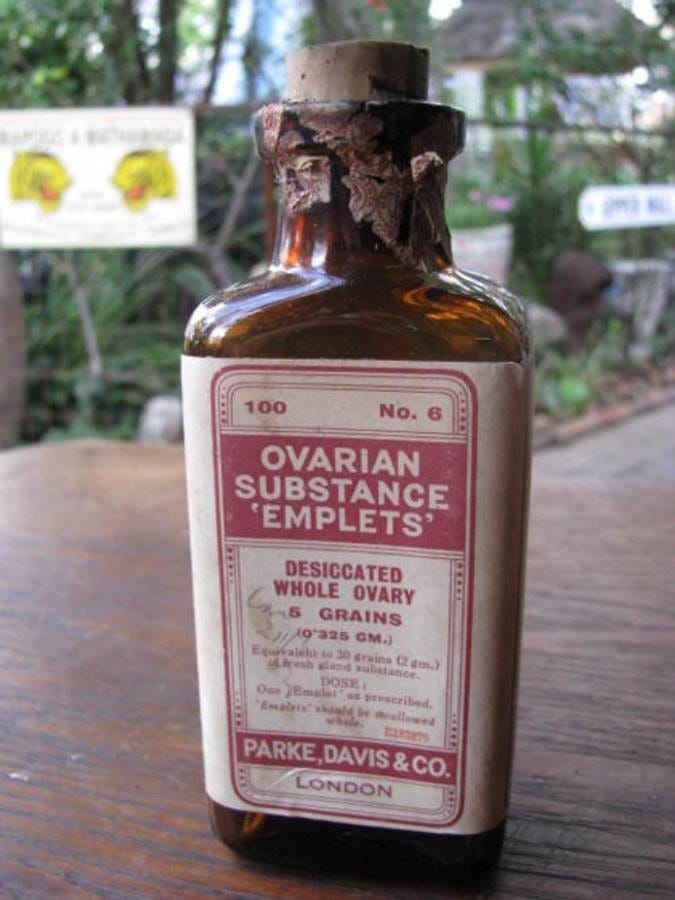
What emerged over the early 1900s, however, was less a standardized treatment than a bewildering array of preparations. Some came as solutions in water, glycerin, or alcohol; others as tablets of dried ovarian material. Perhaps most remarkably, some physicians prescribed fresh sow or cow ovaries “minced in sandwiches” for their patients to consume.43 This remarkable lack of standardization reflected the fundamental problem underlying the entire enterprise: what was the active component? How much should patients take? Did ovary sandwiches work at all?
The gap between clinical enthusiasm and scientific evidence did not go unnoticed. By 1924, the physiologist A.J. Carlson articulated the fundamental objection with precision: “Until it has been conclusively shown in spayed females that these extracts prevent the atrophy of the uterus and maintain oestrus periods typical for the species, it seems clear that experimental ovarian organo-therapy has not been placed on a scientific basis”.44 Carlson’s skepticism identified a real problem. The clinical reports rested on subjective symptom improvement and physician anecdotes. Well controlled biological evidence? Absent.
Yet, physicians continued to dispense them for decades, sustained by a combination of clinical conviction, patient reports of benefit, and the compelling theoretical framework of organotherapy itself. The preparations may well have contained estrogenic material from residual estrogen in bovine ovarian tissue, enough perhaps to produce modest effects. But without standardization and controlled trials, the question of whether they genuinely worked remained perpetually unanswered. What emerged was a pattern that would recur throughout the history of hormone therapy: a compelling therapeutic logic combined with patient-reported improvement could sustain medical practice far longer than rigorous evidence would ordinarily permit, creating an enthusiasm for hormonal supplementation that often ran ahead of what the science actually demonstrated.
And, treatment for women with ovarian failure—age-related or surgically induced— would remain focused on patient testimonials for organ extracts for decades. It would take two decades for chemists and physiologists pursuing the female reproductive, biology to reveal two key hormonal signals of the ovary, estrogens and progesterone.
Medvei. The History of Clinical Endocrinology, 1993. This text has been very useful in contextualizing historical understandings of reproductive endocrinology.
Sievert L. 2025. American Journal of Biological Anthropology. 186(S78), citing Amundsen and Diers, 1973
Gardanne CPL. De La Menopause ou L’age critique des Femmes, 2nd ed. Paris: Mequignon-Marvais; 1821. cited by Baber, R. (2023). Marketing the menopause. Climacteric, 26(3), 171–172.
A persistent historical myth has complicated our understanding of menopause’s place in women’s experience. The claim that menopause was historically “rare” or a modern phenomenon has circulated widely, often grounded in the observation that average life expectancy in the year 1900 stood at approximately forty-eight years. From this statistic emerges a seductive but deeply misleading inference: that most women in the past did not live long enough to experience menopause. This reasoning collapses under scrutiny. As Sievert makes clear in her recent scholarship, the figure of forty-eight years represents average life expectancy at birth, heavily skewed downward by catastrophic rates of infant and childhood mortality (Sievert L. 2025. American Journal of Biological Anthropology. 186(S78)).
A woman who survived the perils of childhood and childbearing age could reasonably expect to live well into her seventies or eighties. The historian Elizabeth Watkins documented how this statistical sleight of hand was weaponized in the twentieth century, particularly by E. Kost Shelton in the 1950s, who deployed the misleading life expectancy statistic to argue that menopause represented a “new” public health crisis demanding medical intervention. In reality, menopause was neither rare nor novel; it was simply, until recently, treated as an inevitable if unremarkable passage of aging, rather than as a medical condition requiring intervention and definition (Watkins. 2007. The Estrogen Elixir. JHU Press. pp. 35–36).
The practice of castration is documented across numerous ancient civilizations, including Rome, Persia, and China, serving military, religious, and social functions. https://doi.org/10.1210/jcem.84.12.6206
Herophilus (c. 335–280 BC) conducted some of the earliest systematic anatomical studies and used the term didymi (twins) to describe the ovaries, drawing an explicit analogy to the testicles from Medvei, 1993
Intriguingly, most birds have only one functional ovary, the left. Some birds of prey also develop a right ovary
Stanford’s History 13 has a good summary of historical debates of human reproductive biology:
Medvei, 1993
Houtzager. 2000. European Journal of Obstetrics & Gynecology and Reproductive Biology. 90(2)125-127
Medvei, 1993, p. 199, citing Pott, The Chirurgical Works, pp. 791–792, London, 1775
Medvei, 1993, p. 201
Medvei, 1993, p. 199
Medvei, 1993, p. 199
Medvei, 1993, p. 199, citing Simmer, 1977
Battey wasn’t the first to perform a bilateral oophorectomy. Ephraim McDowell had done so successfully in 1809 to remove an ovarian tumor, but mortality rates were >90%. The Scottish surgeon Robert Lawson Tait also lays claim to pioneering the oophorectomy.
Battey’s operation, the bilateral oophorectomy, developed in the 1870s and remained a popular surgical fashion for a variety of women’s health disorders through the late 1890s. See Lawerence Longo’s Battey’s Operation for a complete cataloging of the rise and fall of the surgical fashion. Within a decade, some of the most ardent proponents such as the American gynecologist William Goodell, rebuked widespread practice of the procedure. The parallels to the lobotomy trend of the 1940s are striking sparked by António Moniz’s operation. Perhaps Battey too would have won a Nobel Prize for his contributions to medicine.
Medvei, 1993, p. 201; Watkins, 2007, pp. 11–12
Van de Warker, cited in Longo (1979); Watkins, 2007, pp. 11–12
The first report of oopherectomy to treat breast cancer by wouldn’t occur until 1896. George Beatson, inspired by the use of oophorectomy to prolong lactation but but arrest breast growth in cows, removed the ovaries of a pre-menopausal breast cancer patient with a successful response.
Cited in Medvei, 1993, reference 41
The history of organotherapy is somewhat contested. Chinese traditional medicine practices include organ extract supplement and urine extract supplements to treat what we would now characterize as hormonal insufficiencies (hypogonadism).
See Santen and Simpson (2019) Enocrinology for more.
PDF at https://labs.bio.unc.edu/Goldstein/Berthold1849.pdf
It is unlikely that Brown-Séquard’s extracts likely contained enough testosterone to elicit these effects. Perhaps, his report is one of medicine’s most notable placebos (Cussons et al. 2002; Lindholm and Laurberg, 2011).
For a more comprehensive coverage of the development of thyroid replacement therapy in the late nineteenth century, see Swain (2001) The Endocinologist.
Medvei, 1993, pp. 203–204
Medvei, 1993, pp. 203–204
Medvei, 1993, p. 204
Medvei, 1993, p. 204
Watkins, 2007, p. 11
Watkins, 2007, p. 11
Medvei, 1993, p. 200; Watkins, 2007, p. 15